Wabi Sabi is a Japanese design philosophy that celebrates imperfection, simplicity, and the beauty of natural aging. Instead of chasing perfection, it embraces authenticity, raw textures, and a calm, lived-in feel. In today’s fast-paced world, Wabi Sabi interiors offer a peaceful escape by focusing on minimalism, nature, and quiet elegance.
If you want to transform your home into a serene and soulful space, here are 10 Wabi Sabi home aesthetic ideas that are simple, affordable, and deeply calming.

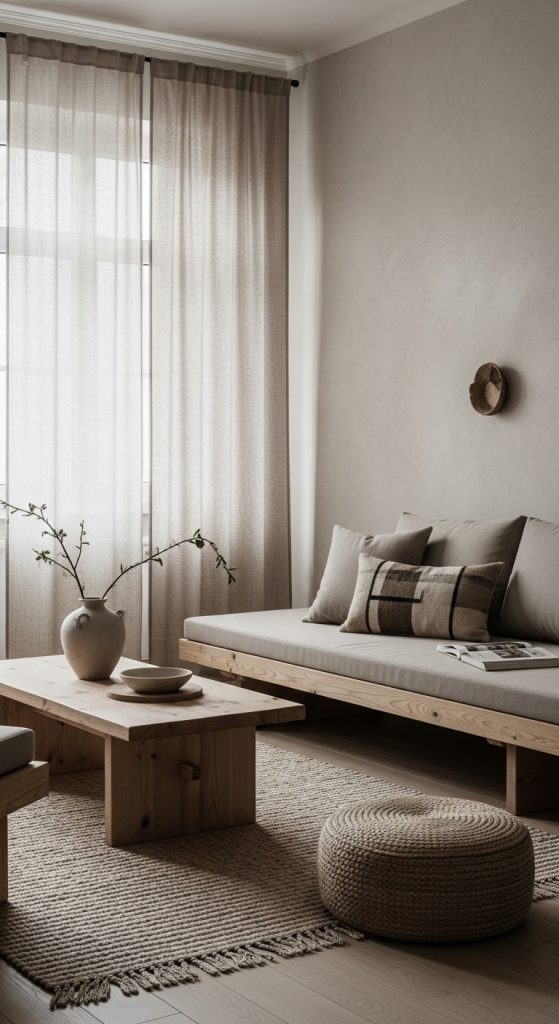
1. Embrace Neutral and Earthy Colors
The foundation of Wabi Sabi design lies in muted, natural tones. Think beige, off-white, taupe, clay, and soft greys. These colors create a calm and grounded atmosphere.
Avoid bright or artificial shades. Instead, go for colors inspired by nature like sand, stone, and wood. You can paint your walls in soft neutral tones or use linen curtains and rugs to achieve this look.
2. Use Natural Materials
Wabi Sabi is all about connecting with nature. Incorporate materials like wood, stone, clay, linen, and cotton into your décor.
Choose raw, unfinished wood furniture or handmade ceramic pieces. A slightly uneven surface or rough texture actually enhances the beauty rather than ruining it.

3. Highlight Imperfection
Perfection is not the goal here. Cracks, uneven edges, and aged surfaces are what make a space feel real and meaningful.
For example, a chipped ceramic vase or a slightly worn wooden table adds character. Instead of hiding flaws, let them be part of your home’s story.

4. Keep It Minimal
Decluttering is essential for a Wabi Sabi aesthetic. Keep only what you truly need and love.
Avoid overcrowding your space with decorations. A few meaningful items placed thoughtfully can create a more powerful visual impact than a cluttered room.

5. Add Handmade and Vintage Pieces
Handcrafted items carry a sense of uniqueness and soul. Look for handmade pottery, woven baskets, or vintage furniture.
These items often have small imperfections, which perfectly align with Wabi Sabi philosophy. Thrift stores and local markets are great places to find such pieces.

6. Incorporate Soft Lighting
Lighting plays a huge role in setting the mood. Wabi Sabi spaces favor soft, warm, and diffused lighting.
Use paper lanterns, warm LED bulbs, or candles to create a cozy and peaceful environment. Avoid harsh, bright lights that feel too modern or artificial.

7. Bring Nature Indoors
Plants are an essential element of Wabi Sabi interiors. They add life, freshness, and a natural touch.
Choose simple plants like olive trees, dried branches, or wildflowers. Even a single stem in a vase can make a strong aesthetic statement.

8. Focus on Texture
Instead of bold colors or patterns, Wabi Sabi relies on texture to create visual interest.
Mix different textures like rough wood, soft linen, woven fabrics, and clay. Layering textures adds depth while maintaining a calm and neutral look.

9. Create Empty Space
In Wabi Sabi, empty space is just as important as filled space. It allows the room to breathe and feel open.
Don’t feel the need to fill every corner. Leaving some areas empty creates a sense of balance and tranquility.

10. Choose Simple and Functional Furniture
Furniture should be low, simple, and functional. Avoid overly decorative or bulky pieces.
Opt for clean lines, natural finishes, and practical designs. A low wooden table or a simple floor cushion can perfectly match the Wabi Sabi vibe.

Final Thoughts
Wabi Sabi is more than just a design trend—it’s a lifestyle that encourages mindfulness and appreciation for the present moment. By embracing imperfection, simplicity, and nature, you can create a home that feels peaceful, authentic, and deeply comforting.
You don’t need a big budget to achieve this aesthetic. Small changes like decluttering, adding natural elements, and choosing soft colors can make a huge difference.