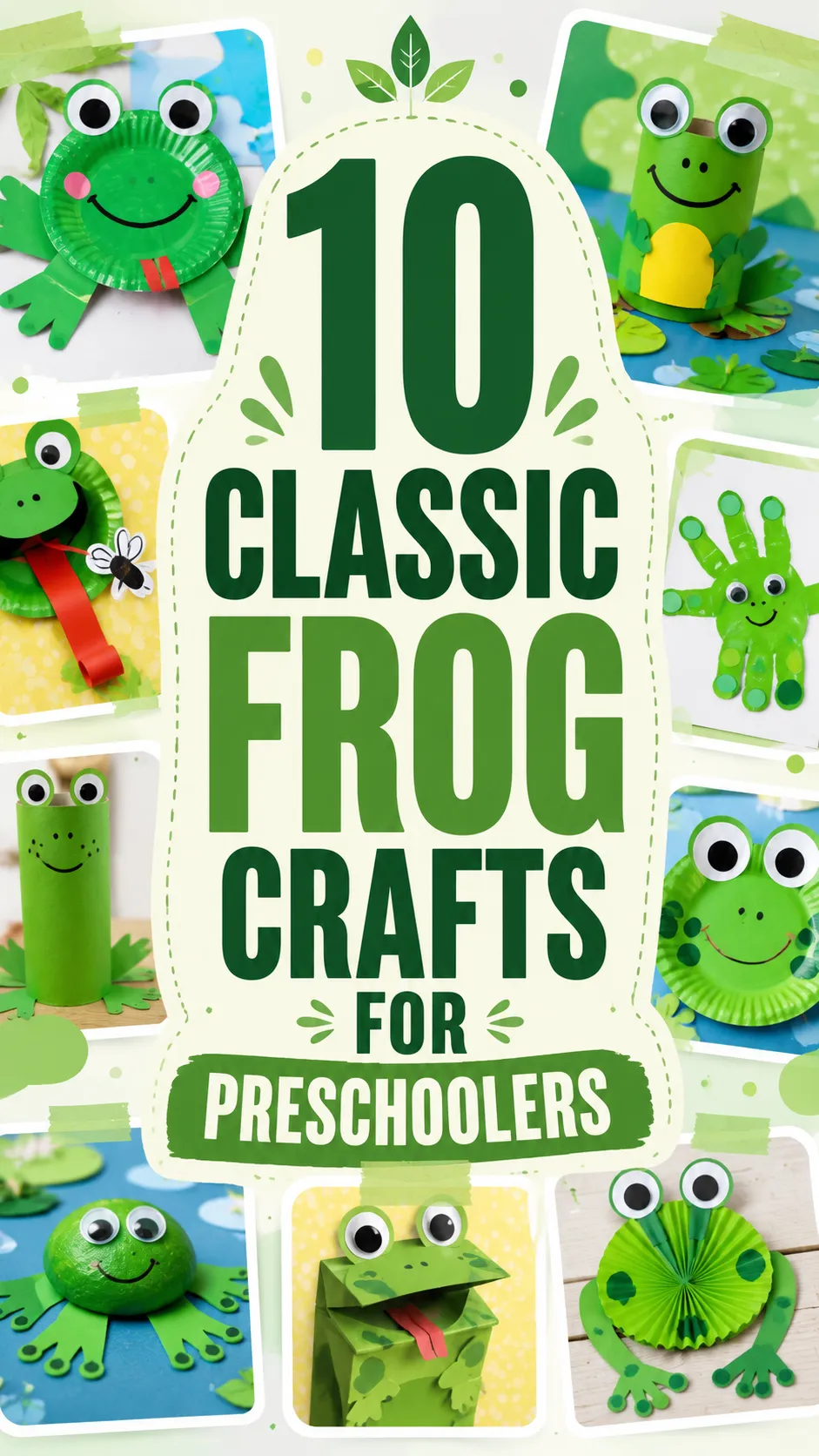
Frogs are the perfect subject for preschool crafting. They are colorful, have distinct features (big eyes, wide mouths, long tongues), and their life cycle—from tadpole to adult—provides a wonderful opportunity to blend art with basic science.
These 10 craft ideas are designed to be simple, age-appropriate, and focused on building fine motor skills like cutting, gluing, and painting, all while keeping the mess manageable for little hands.
1. Paper Plate “Hungry” Frog
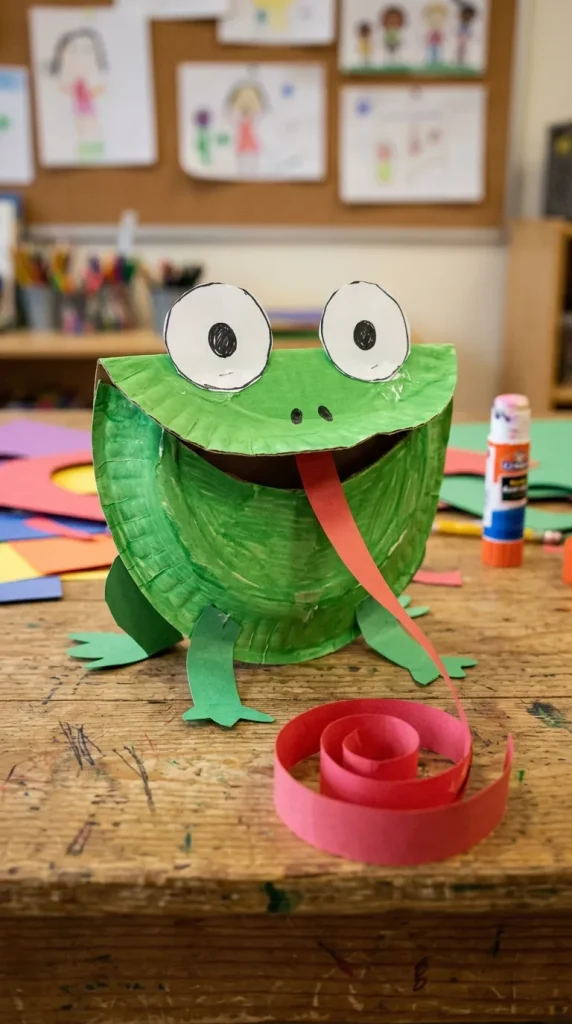
This is a classic that turns a simple plate into an interactive toy.
- The Idea: Fold a green-painted paper plate in half to create a “mouth.” Glue on two large eyes on top and a long, red paper tongue inside.
- Skill Focus: Following instructions and identifying body parts.
2. Cup-and-Ball “Catch-a-Fly” Frog
A fun DIY game that teaches hand-eye coordination.
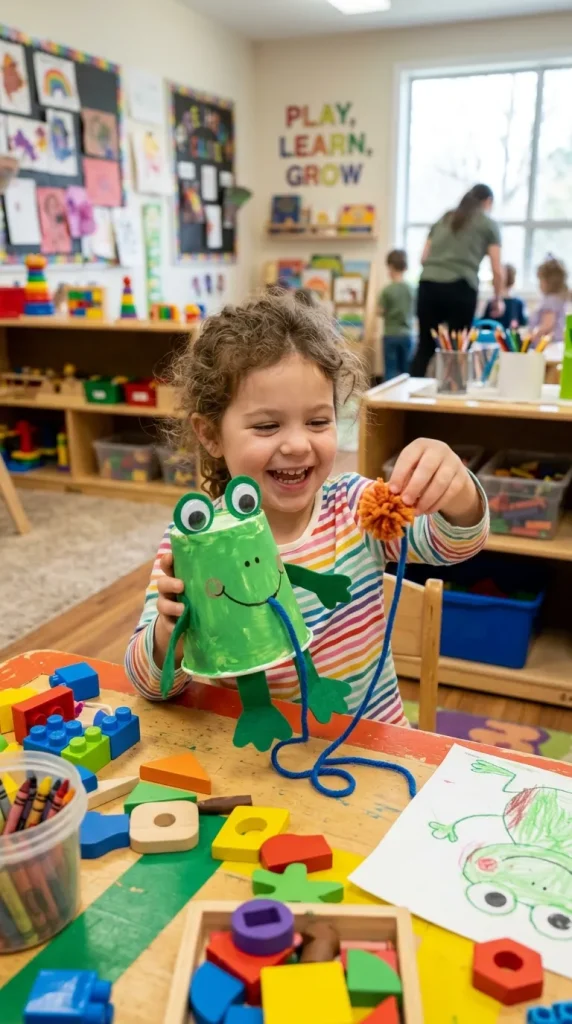
- The Idea: Paint a plastic or paper cup green. Attach a string to the bottom of the cup and tie a small pom-pom (the “fly”) to the other end. Draw a frog face on the cup.
- Skill Focus: Coordination and patience as they try to swing the “fly” into the “frog.”
3. Clothespin “Leaping” Frogs
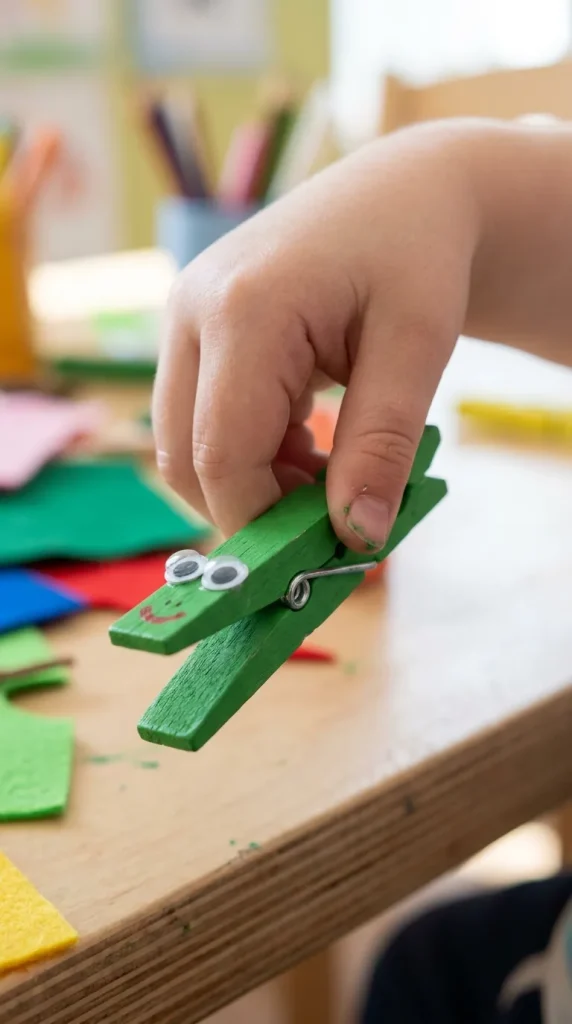
These frogs are kinetic—they actually move!
- The Idea: Use a wooden clothespin as the body. Glue a green cardstock “frog head” to the top clip. When the child squeezes the clothespin, the frog’s mouth opens.
- Skill Focus: Strengthening hand muscles, which is essential for pre-writing skills.
4. Handprint Frog Pads
Personalized art that you can keep as a memento.
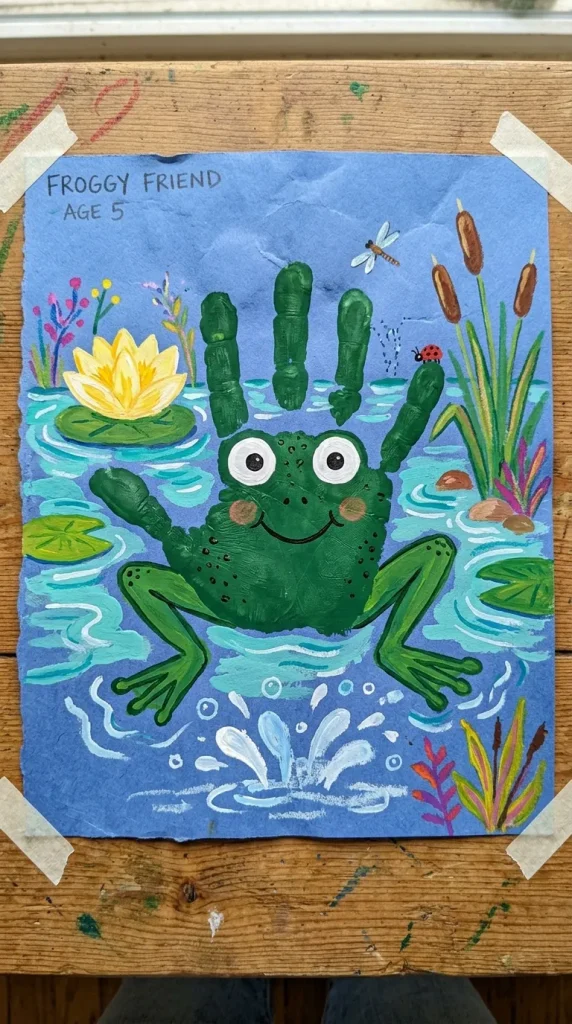
- The Idea: Have your preschooler paint their palm green and press it onto a piece of blue construction paper (the “pond”). Once dry, add eyes and a smile to the palm.
- Skill Focus: Sensory play and understanding spatial placement.

5. Popsicle Stick Frog Masks
Perfect for imaginative play and dramatic storytelling.
- The Idea: Use a paper plate cut in half or cardstock to make a mask. Glue a popsicle stick to the bottom so they can hold it up to their faces.
- Skill Focus: Creative expression and social role-playing.
6. Tissue Paper “Frog Spawn” (Life Cycle)
Teach the frog life cycle using different materials.
- The Idea: Use bubble wrap to stamp “frog eggs” onto paper. Then, use green tissue paper squares (crumpled into balls) to create the frog body.
- Skill Focus: Differentiating between stages of life and texture exploration.
7. Cupcake Liner Frog Faces
An easy way to create a lot of frogs very quickly.
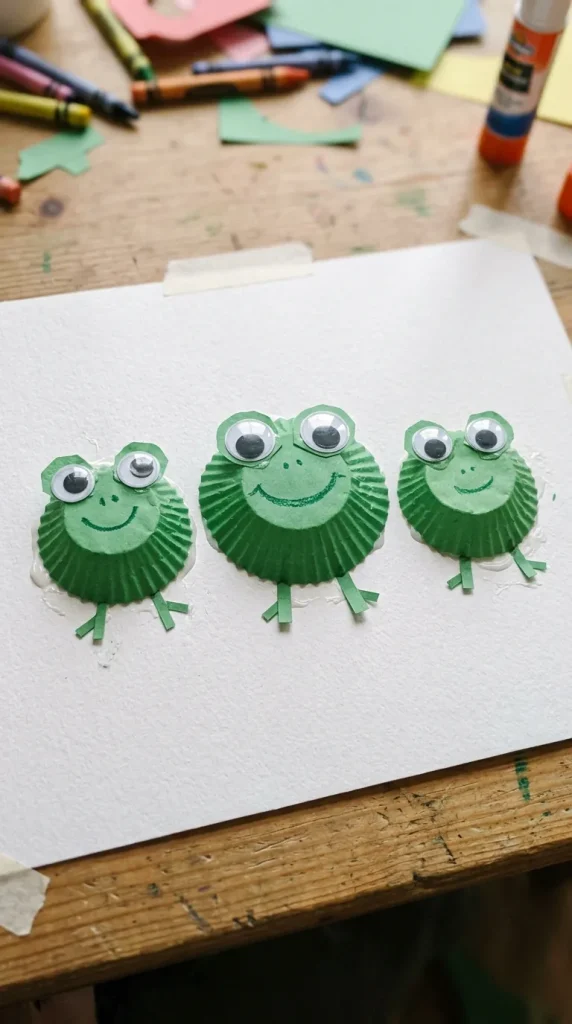
- The Idea: Flatten a green cupcake liner. Glue it to paper and add googly eyes and a red paper strip for a tongue. It’s perfect for a “froggy family” project.
- Skill Focus: Patterning and simple assembly.

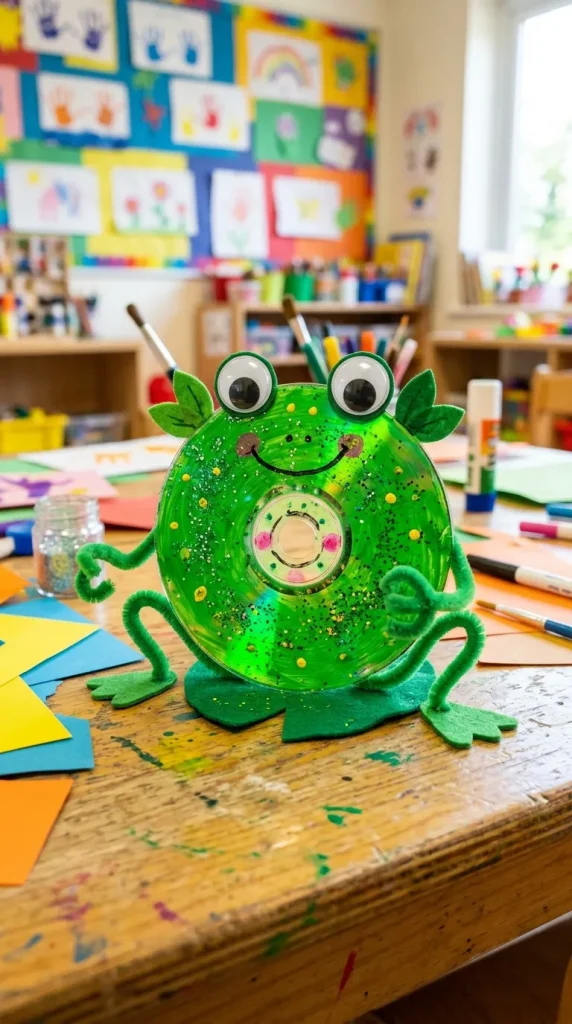
8. CD “Pond” Frog
Upcycle old materials into shiny, fun art.
- The Idea: Use an old CD as the base. Glue green construction paper shapes on top to form the frog’s body. The shiny center of the CD makes a great “belly.”
- Skill Focus: Recycling awareness and shape recognition.
9. Toilet Paper Roll “Sitting” Frog
Create 3D frogs that can stand on a table.
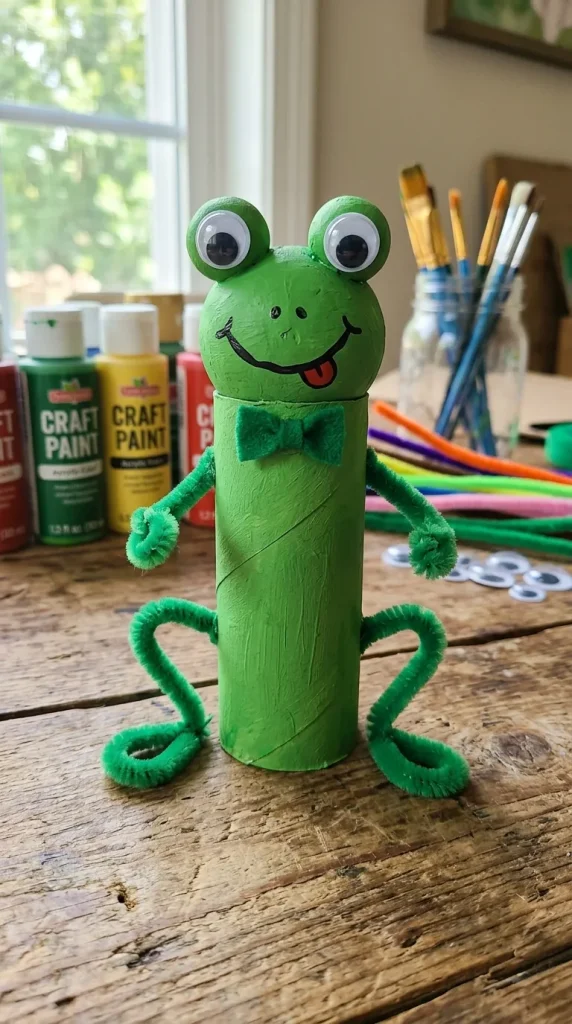
- The Idea: Paint a roll green. Cut two “legs” at the bottom of the tube so the frog can sit upright. Add construction paper arms and a big, funny smile.
- Skill Focus: 3D construction and understanding structural balance.
10. Sponge-Painted Frog Pond
Focus on color mixing and texture.
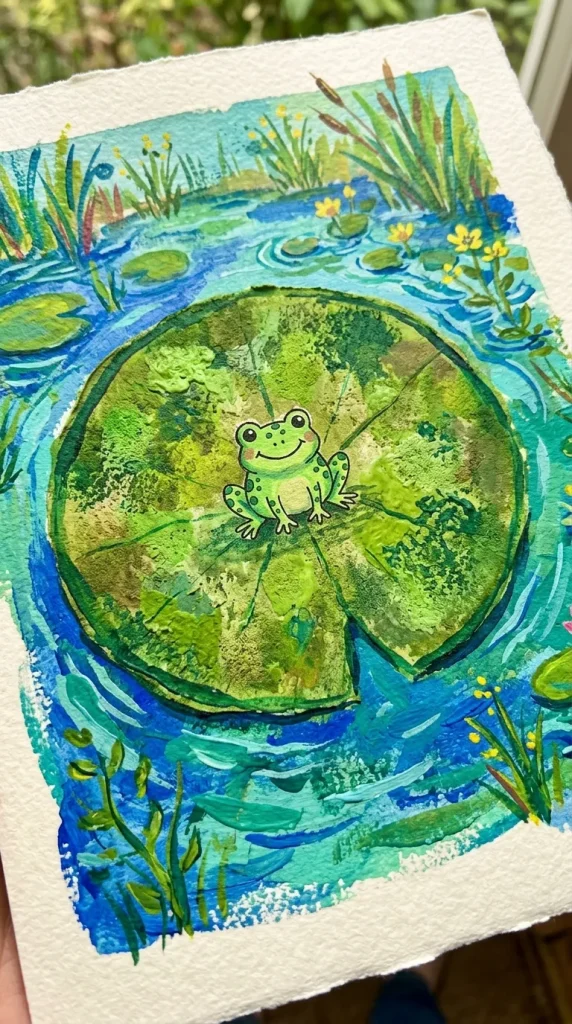
- The Idea: Cut a sponge into a “lily pad” shape. Dip it in green paint and stamp it onto paper. Then, help them draw or glue a simple frog on top of their lily pad.
- Skill Focus: Color mixing (what happens when green and blue meet?) and fine motor stamping.
Tips for Successful Preschool Crafting
- Prep Work: Preschoolers have short attention spans. Pre-cut the shapes (tongues, eyes, legs) so they can focus on the fun part: gluing and decorating.
- Use “Safe” Adhesives: Use glue sticks for paper-to-paper projects and school glue (PVA) for heavier items. Avoid hot glue guns for the kids.
- Embrace the “Mess”: Let them be messy! If the frog has eyes in the wrong place, it’s a “silly frog.” The process is more important than the final result.



Leave a Reply